Eliz McD. wrote:
I looked up some of the other words and the translations were not related to my topic. Fuill was translated as tricks and fuiollair was breeder. Possibly the accent marks are throwing off the tranlation.
Yes, as I mentioned earlier, if you leave out an accent the word is misspelled. If an accent is in a word, you need to use it. Without it, the pronunciation changes, but also, what your left with will be meaningless, or may have an entirely different meaning. Whatever the case, it won't mean what you want it to.
Eliz McD. wrote:
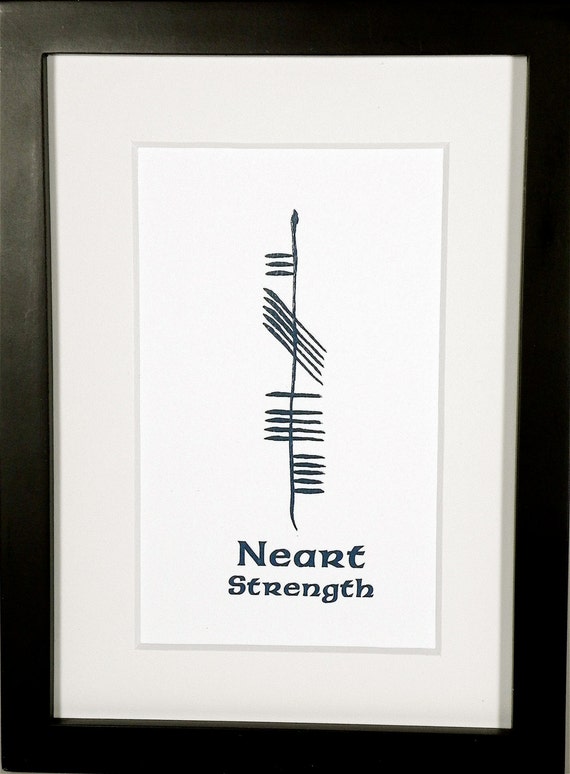
Does 'neart' mean strength? I also saw a picture on the Internet that had 'bri' (accent oved the i) meaning strength.
Yes,
neart does mean strength. And it can be used somewhat abstractly, for example in the seanfhocal,
ní neart go chur le céile, whereas, as I understand it
brí refers to physical strength more specifically. Perhaps other members can confirm or correct me here?
By the way, on windows computers, if you want to get an accent mark over a letter, press AltGr and the letter at the same time. On Mac computers it should be option and the letter.
Eliz McD. wrote:
Could this be the tree symbolism associated with Ogham?
I wouldn't waste your time looking too far into the "tree symbolism" that's been ascribed to ogam. It's something of a modern construction with little historic basis. Tree names were used in a manuscript to describe the sounds of the letters, long after the original users of ogam ceased to use the alphabet, and this practice has been somewhat fetishised in the modern day.
It's a bit like if somebody, 1000 years from now, found a young child's copy book from today with "a is for alligator, b is for bear, c is for cat, d is for dog, etc." written in it. The animals are a mnemonic device to help people learn the alphabet. They don't signify that we have a cult of animals in the 21st century, and that we believe every letter of our alphabet has magical properties associated with each animal.

 Login
Login Register
 FAQ
FAQ Search